Elevating Brand Aesthetics: The Strategic Power of Watercolor Floral and Floral Bouquets
In the visual economy of the modern web, aesthetics are not merely decorative; they are functional assets that influence perception, trust, and engagement. For entrepreneurs, marketers, and creators operating in competitive niches, the choice of visual elements can define the trajectory of a project. Watercolor Floral designs and intricate Floral Bouquets have emerged as more than just a passing trend; they represent a strategic tool for softening corporate edges, humanizing brands, and creating an immediate emotional connection with an audience. When utilized with intention, these assets transform standard communications into memorable experiences.
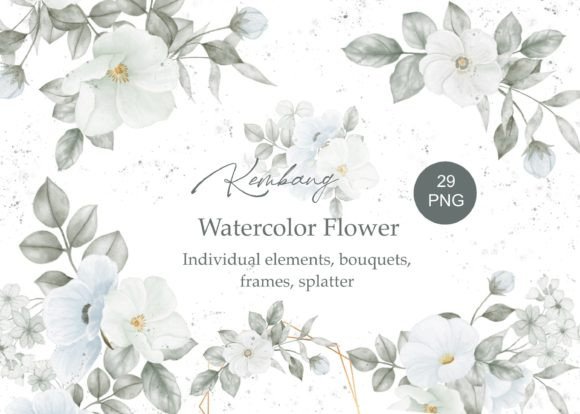
The shift toward organic, hand-painted visuals reflects a broader consumer desire for authenticity. In a digital landscape saturated with sterile vector graphics and generic stock photography, watercolor floral clipart offers texture, depth, and a sense of artisanal care. This article explores how to leverage high-resolution floral assets—specifically collections featuring individual elements, bouquets, frames, and watercolor splashes—to achieve tangible business results across wedding stationery, nursery decor, planning tools, and digital branding.
Strategic Positioning Through Organic Design
The primary value of incorporating Watercolor Floral motifs into your portfolio lies in their psychological impact. Unlike sharp, geometric designs that convey rigidity and precision, watercolor textures suggest fluidity, growth, and warmth. For a small business owner or a freelancer, this distinction is critical. If your brand promise revolves around care, customization, or personal growth, your visual language must mirror those values.
Consider the application of floral bouquets in wedding and baby shower stationery. These events are deeply emotional milestones. Using high-quality, 300 DPI PNG files with transparent backgrounds allows designers to layer elements without the harsh white boxes often associated with lower-quality clipart. This seamless integration creates a cohesive look that feels bespoke rather than templated. When a client sees a wedding invitation adorned with a delicate, hand-painted bouquet, they subconsciously associate that level of detail with the quality of service they will receive. The design becomes a proxy for professionalism.
Furthermore, the versatility of greenery clipart and flower clipart extends beyond event planning. In the realm of blog and web design, these elements serve as effective visual breaks. Long-form content can be daunting; strategically placed watercolor splashes or botanical borders guide the reader's eye, reduce cognitive load, and maintain engagement. This is not about filling space; it is about curating a reading experience that feels inviting and structured.
Technical Specifications as a Foundation for Quality
A common pitfall for creators is prioritizing style over substance, specifically regarding file resolution. To achieve professional results, the technical specifications of your assets are non-negotiable. A strategic approach to design begins with sourcing materials that offer scalability and clarity. The ideal asset pack should provide Watercolor Floral elements ranging from 3600 pixels up to 5000 pixels at 300 DPI.
Why does this matter? High resolution ensures that your designs remain crisp whether they are viewed on a retina display or printed on large-format wall art. For instance, if you are creating nursery wallpapers or printable wall decoration, low-resolution images will pixelate when enlarged, instantly degrading the perceived value of the product. By utilizing assets with transparent backgrounds and high pixel counts, you retain full control over the final output. You can scale a single bouquet from a small logo icon to a massive backdrop without losing the subtle gradients and brushstroke details that define the watercolor medium.
Additionally, receiving individual elements alongside pre-made bouquets offers significant operational flexibility. A collection containing 13 individual elements, 5 distinct bouquets, 2 frames, and 9 watercolor splashes provides a modular toolkit. Instead of being locked into a single composition, you can deconstruct bouquets to create custom arrangements that fit specific layout constraints. This modularity supports rapid prototyping and iteration, allowing marketers and designers to test different visual hypotheses without starting from scratch.
Diverse Applications Across Industries
The utility of Floral Bouquets and watercolor assets spans a wide array of industries. Understanding where and how to deploy them maximizes their return on investment.
- Planners and Productivity Tools: The planner community thrives on aesthetics that inspire organization and calm. Integrating greenery clipart and soft floral headers into digital or printable planners enhances the user experience. It transforms a mundane task list into a ritual of self-care, increasing user adherence and satisfaction.
- Photo Books and Scrapbooking: For hobbyists and professional photographers, watercolor frames and splashes add narrative context to photographs. They can soften harsh lighting in photos or tie together disparate images into a unified theme, essential for creating heirloom-quality photo books.
- Educational Materials: Educators and publishers can use Watercolor Floral illustrations to make learning materials more approachable, particularly for early childhood education where soft colors and natural forms are engaging without being overstimulating.
- E-Commerce and Packaging: Small business owners selling handmade goods can use these graphics for packaging inserts, thank-you cards, and social media promotions. The "unboxing" experience is a crucial touchpoint in customer experience (CX); beautiful, floral-branded packaging encourages social sharing and brand loyalty.
Risks of Unintentional Design and How to Avoid Them
While the benefits are clear, the indiscriminate use of Watercolor Floral assets carries risks. The most significant danger is brand dilution. If every piece of communication is cluttered with flowers and splashes without a coherent color palette or stylistic direction, the brand appears unfocused and amateurish. Design must serve a purpose, not just fill whitespace.
To mitigate this, adopt a strategy of restraint. Use flower clipart to highlight key information, not to obscure it. Ensure that the color tones of your floral elements align with your existing brand identity. If your brand is bold and energetic, a pastel watercolor bouquet might send mixed messages unless used ironically or as a specific campaign contrast. Always ask: Does this element support the goal of this specific piece?
Another risk is inconsistency across platforms. Using a high-resolution bouquet on a print flyer but a compressed, low-quality version on a website creates a disjointed customer journey. Maintain a centralized library of your approved assets—ensuring you always have access to the 300 DPI originals—to guarantee consistency from your Instagram stories to your physical brochures.
Decision-Making Framework for Asset Selection
Before integrating new Floral Bouquets or watercolor splash graphics into your workflow, evaluate them against three criteria: Versatility, Resolution, and Emotional Resonance.
- Versatility: Can the elements be separated? Does the pack include both complex bouquets and simple individual leaves? A versatile pack allows you to build unique compositions rather than recycling the same image repeatedly.
- Resolution: Are the files truly 300 DPI and large enough for print? Verify the pixel dimensions (3600px–5000px) before purchase or download. This future-proofs your designs for large-scale applications like wall art.
- Emotional Resonance: Do the colors and styles match the feeling you want to evoke? A moody, dark watercolor floral set suits a different brand narrative than a bright, airy spring collection.
By treating these graphic resources as strategic investments rather than mere decorations, you elevate the quality of your output. Whether you are designing a nursery wallpaper that soothes a child, a wedding invitation that sets the tone for a celebration, or a corporate report that needs a touch of humanity, the right Watercolor Floral elements bridge the gap between functionality and beauty.
Ultimately, the goal is intentional design. When you combine high-quality, transparent PNG assets with a clear understanding of your audience's needs, you create work that resonates. The Watercolor Floral aesthetic is powerful because it reminds us of the natural world in a digital space. Use it wisely, plan its application carefully, and let the organic beauty of these designs enhance your professional narrative.