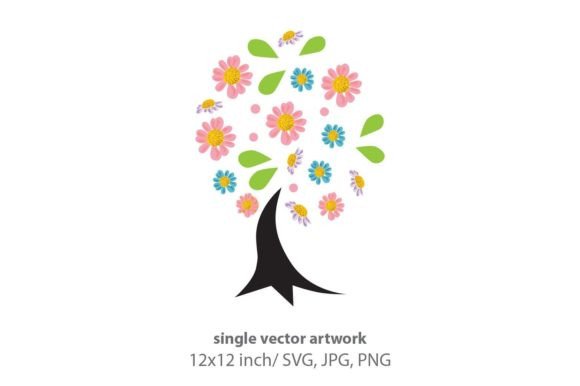
Evaluating Tree with Flowers SVG Assets for Professional and Personal Design Projects
In the landscape of digital design resources, vector graphics have become the cornerstone of versatile creativity. Among these, a Tree with Flowers SVG stands out as a particularly adaptable element, bridging the gap between organic nature themes and structured graphic design. When evaluating assets for projects ranging from logo creation to large-scale wall art, understanding the technical specifications and practical applications of these files is essential. This analysis focuses on high-quality vector files created in professional environments like Adobe Illustrator, specifically those optimized at an artboard size of 12 x 12 inches with a resolution standard of 300 DPI for raster exports, utilizing an RGB color palette.
Defining the Asset: Vector Precision vs. Raster Limitations
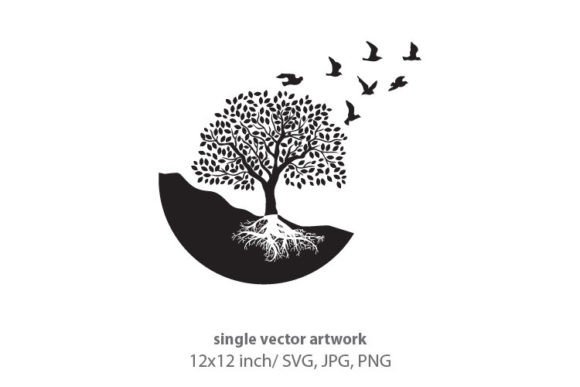
To make an informed decision about incorporating a Tree with Flowers SVG into your workflow, one must first distinguish between the file formats typically offered: SVG, JPG, and PNG. The core value of this asset lies in its vector foundation. Created in Adobe Illustrator, the SVG (Scalable Vector Graphics) format uses mathematical paths rather than pixels. This means the image can be scaled from a tiny jewelry stamp to a massive building wrap without any loss of clarity or "pixelation."
In contrast, the included JPG and PNG files are raster images. While the source files are generated at a robust 300 DPI—making them suitable for high-quality printing up to the 12 x 12 inch artboard limit—they possess a fixed resolution. If you attempt to enlarge a PNG beyond its intended dimensions, the image will degrade. Therefore, the primary differentiator here is scalability. For users whose projects require variable sizing, such as a logo that must appear on both a business card and a billboard, the SVG component is non-negotiable. However, for static applications like a pre-sized invitation or a specific web banner where dimensions are fixed, the raster formats offer immediate usability without the need for vector editing software.
Comparative Analysis: Use Cases and Format Suitability
When choosing how to deploy a Tree with Flowers SVG, the decision often hinges on the end product. Different industries and craft sectors prioritize different aspects of the file package.
Logo Design and Brand Identity
For graphic designers creating brand identities, the vector SVG is the superior choice. A tree motif often symbolizes growth, stability, and nature, making it a popular choice for eco-friendly brands, wellness centers, and family enterprises. The ability to manipulate anchor points in Illustrator allows a designer to simplify the branches or alter the flower density to match a specific brand voice. Furthermore, because the file is in RGB, it is optimized for digital display, ensuring colors remain vibrant on websites and social media profiles. If the final output requires print materials, the vector data can easily be converted to CMYK by the designer, preserving the integrity of the lines.
Handmade Crafts and Cutting Machines
The maker community, utilizing tools like Cricut or Silhouette, relies heavily on SVG files. In this context, the Tree with Flowers SVG serves as a cut file. The clean paths generated by professional vector programs ensure that cutting machines follow the lines accurately, preventing tears in vinyl or cardstock. Here, the 12 x 12 artboard size is particularly relevant, as it aligns perfectly with the standard cutting mats used in these machines. While JPGs are useless for cutting, the PNGs can serve as reference images or be used for "Print then Cut" projects where the machine prints the color first and then cuts the outline.
Wall Art and Home Decor
For those creating wall art, the decision between vector and raster depends on the printing method. If using a home inkjet printer on standard paper, the 300 DPI PNG or JPG is sufficient and often easier to handle for users unfamiliar with vector software. However, for professional canvas prints or large decals, the SVG is critical. It allows a print shop to scale the artwork to fit a specific wall dimension precisely, ensuring that the flowers and branches remain crisp regardless of the final size. The RGB color palette ensures that the greens and floral hues appear lively on screens and modern digital printers.
Technical Considerations: Resolution, Color, and Editing
A crucial factor in evaluating these digital elements is the technical setup described: a 12 x 12 inch artboard at 300 DPI in RGB. This specification tells us a lot about the intended workflow.
- Artboard Size: The 12 x 12 square format is a industry standard for scrapbooking, card making, and vinyl cutting. It suggests the asset was designed with these crafts in mind. Users working in rectangular formats (like letter or A4 size) may need to adjust their canvas settings, but the vector nature of the SVG makes repositioning and resizing trivial.
- Resolution: 300 DPI is the gold standard for print. It ensures that when the raster files (JPG/PNG) are used, they meet professional quality thresholds. Anything lower, such as 72 DPI, would result in blurry prints. This high resolution adds value for users who may not have the skills to edit vectors but still need high-quality print outputs.
- Color Palette: The use of RGB indicates the files are primarily optimized for digital screens and modern digital printing processes. Users intending to use these designs for traditional offset printing (like magazines or brochures) should be aware that they might need to convert the colors to CMYK. While vectors handle this conversion well, complex gradients in RGB can sometimes shift unexpectedly when moved to the CMYK color space, requiring a quick review.
Strengths and Trade-offs of Pre-Made Vector Assets
Utilizing a pre-made Tree with Flowers SVG offers significant advantages over commissioning a custom illustration or drawing one from scratch. The most obvious benefit is time efficiency. For a small business owner creating party decor or a hobbyist making handmade cards, the ability to download and immediately implement a professional-grade design accelerates the production timeline. Additionally, because these files are made in Adobe Illustrator, they typically feature clean topology—meaning the paths are logical, grouped correctly, and free of unnecessary anchor points. This "cleanliness" is vital for smooth cutting and easy editing.
However, there are trade-offs to consider. The primary limitation is exclusivity. Since these are stock digital elements, other designers may purchase and use the same Tree with Flowers SVG. For a unique corporate logo, this lack of exclusivity can be a drawback. In such cases, the asset serves better as a starting point or a supplementary element rather than the sole brand identifier. Customization becomes key; altering the color scheme, combining it with typography, or modifying the branch structure can help mitigate the risk of looking generic.
Another consideration is the learning curve. To fully leverage the SVG file, one needs access to vector editing software like Adobe Illustrator, CorelDRAW, or free alternatives like Inkscape. Users who only have basic image viewers or simple photo editors will be restricted to using the JPG and PNG versions, thereby losing the scalability benefit. Therefore, the value of this asset package is directly correlated with the user's technical capability and software access.
Decision Factors: When to Choose This Resource
Determining whether this specific digital graphic element is the right fit for your project involves weighing your specific needs against the file capabilities.
Choose the Tree with Flowers SVG if:
- You require scalability for various output sizes, from small stationery to large signage.
- You have access to vector editing software and the skills to modify colors or shapes.
- Your project involves vinyl cutting, laser engraving, or embroidery digitizing, where path data is required.
- You need a quick, high-quality base for a nature-themed project without the cost of a custom commission.
Consider alternative options if:
- You need a completely unique, trademarkable logo and cannot risk using a stock element that others might also own.
- You lack vector software and have no intention of learning it, limiting you to the fixed-size raster images.
- Your project requires a specific artistic style (e.g., watercolor texture or hyper-realism) that a standard vector line art cannot replicate without significant modification.
Final Thoughts on Integration
The versatility of a Tree with Flowers SVG package, encompassing SVG, JPG, and PNG formats, makes it a robust resource for a wide demographic of creators. Whether the goal is to produce elegant wedding invitations, durable outdoor signage, or intricate jewelry designs, the underlying quality of the vector source file ensures professional results. By understanding the distinction between the scalable vector and the fixed-resolution raster files, and by recognizing the implications of the RGB color space and 12 x 12 artboard constraints, users can effectively integrate these elements into their workflows. Ultimately, the value lies not just in the image itself, but in how strategically it is applied to meet the specific demands of the medium and the audience.