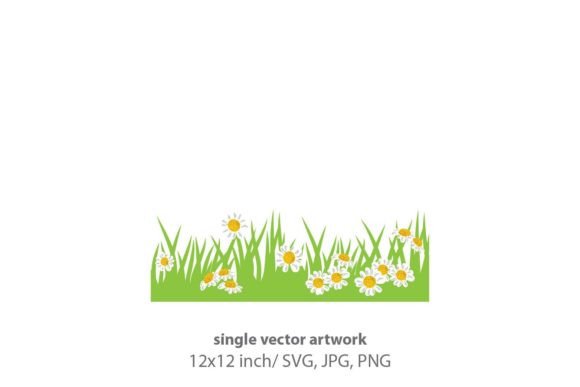
Spring Flowers Border: A Versatile Vector Asset for Creative Projects
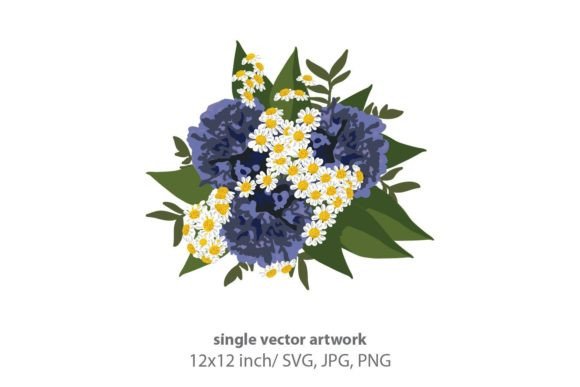
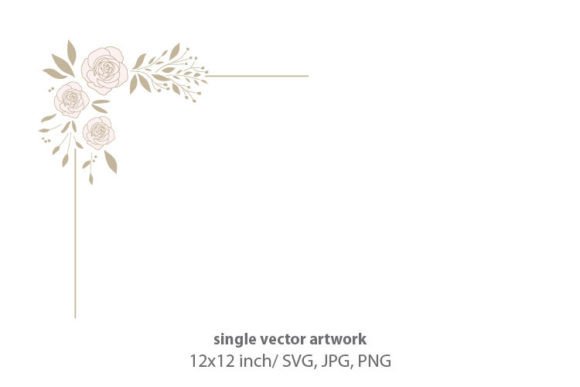
The Spring Flowers Border represents a specific category of digital graphic assets designed to frame, decorate, and enhance visual compositions. Unlike raster images that rely on fixed pixels, this particular asset is constructed as a vector-based SVG logo icon, created within professional software like Adobe Illustrator. The defining technical characteristic of this file is its artboard size of 12 x 12 inches with a resolution capability equivalent to 300 DPI in RGB color palette formats. Understanding the implications of these specifications is essential for designers, crafters, and business owners evaluating whether this element aligns with their specific project requirements.
Understanding the Technical Foundation
At its core, the Spring Flowers Border is not merely a picture of flowers; it is a mathematical representation of shapes and paths. Because the files are made in a vector program, they possess infinite scalability. This means the design can be enlarged to the size of a billboard or reduced to the size of a jewelry charm without any loss of clarity or the introduction of pixelation. The inclusion of multiple file formats—SVG, JPG, and PNG—ensures compatibility across a vast array of software ecosystems, from web browsers to print layout applications.
The 12 x 12 inch artboard size is a strategic choice that caters specifically to the crafting and scrapbooking industries, where 12-inch square papers are standard. However, because the source is vector-based, this dimension serves as a reference point rather than a hard limit. The 300 DPI specification indicates that when these vectors are rasterized into JPG or PNG formats for printing, they meet the industry standard for high-quality offset and digital printing. The RGB color palette suggests the designs are optimized for screen display and modern digital printers, offering vibrant hues that mimic natural spring blooms.
Evaluating Use Cases and Applications
When considering the utility of the Spring Flowers Border, one must look at the breadth of potential applications. The versatility of this asset allows it to function effectively in both commercial and personal contexts. For those interested in logo design, the floral elements provide an organic, welcoming aesthetic suitable for boutiques, florists, wedding planners, or wellness brands. The vector nature of the SVG file allows a graphic designer to isolate specific flowers or leaves from the border to create a unique monogram or icon, ensuring the final brand identity is distinct.
In the realm of stationery and invitations, this border serves as an immediate framing device. Whether for handmade cards, announcements, or party decor, the pre-designed arrangement saves significant time compared to drawing floral elements from scratch. Users can integrate the JPG or PNG versions directly into word processing software or basic photo editors, while advanced users can manipulate the SVG in illustration programs to change colors or line weights to match specific event themes.
Beyond paper goods, the asset is highly relevant for handmade craft items and printed paper items. Crafters utilizing die-cutting machines often require high-contrast SVG files to create stencils or cutouts. Similarly, those engaged in sublimation printing for jewelry or apparel benefit from the 300 DPI resolution, which ensures crisp edges on mugs, t-shirts, and pendants. For web design, the SVG format is particularly valuable due to its small file size and ability to remain sharp on high-resolution retina displays, making it an excellent choice for website headers or section dividers.
Benefits and Strategic Advantages
The primary benefit of selecting a professionally crafted Spring Flowers Border lies in efficiency and consistency. Creating a balanced floral composition requires a keen eye for symmetry, color theory, and negative space. By utilizing a pre-made asset, creators bypass the initial sketching phase, allowing them to focus on the broader execution of their project. Furthermore, because the files are generated in Adobe Illustrator, the layers and paths are typically clean and organized. This structural integrity makes editing significantly easier for users who need to recolor elements to match a specific brand guideline.
Another significant advantage is the multi-format delivery. Having access to SVG, JPG, and PNG within a single package eliminates the need for file conversion tools, which can sometimes degrade image quality. The JPG format offers universal compatibility for quick previews or low-stakes printing, while the PNG provides transparency, allowing the border to be overlaid on colored backgrounds without a white box surrounding it. The SVG remains the powerhouse for editing and scaling.
Considerations and Tradeoffs
While the Spring Flowers Border offers substantial utility, there are tradeoffs and considerations that buyers must evaluate. First, the reliance on an RGB color palette means that if the final output is intended for professional offset printing using CMYK inks, a color conversion will be necessary. While modern software handles this well, some vibrant neon greens or electric blues common in RGB may appear duller when converted to print-ready CMYK. Users planning large-scale commercial printing should verify color proofs before final production.
Additionally, while "vector-based" implies editability, the degree of ease depends on the user's software proficiency. A user with only basic photo editing tools may find the SVG format inaccessible, forcing them to rely on the static JPG or PNG versions. In such cases, the benefit of infinite scalability is lost unless the user exports the PNG at a sufficiently large size initially. Therefore, the value of this asset is highest for those who either possess vector editing software or have access to a designer who can manipulate the source files.
There is also the consideration of uniqueness. Since these digital graphics elements are available for purchase, there is a possibility that other individuals or businesses may use the same Spring Flowers Border in their projects. For a mass-market product like a greeting card sold at a local fair, this is rarely an issue. However, for a corporate logo intended to be a exclusive trademark, relying solely on a stock border without significant modification may pose branding challenges. In these scenarios, the asset should be used as a foundation rather than a final solution.
Determining the Right Fit for Your Goals
Deciding whether the Spring Flowers Border is the right choice involves assessing the scope and timeline of your project. If you are a small business owner needing immediate, high-quality visuals for a spring promotion, or a crafter looking to produce a batch of handmade invitations over a weekend, this asset is a strong fit. It bridges the gap between amateur aesthetics and professional polish without requiring hundreds of hours of design work.
Conversely, if your project demands a hyper-specific botanical accuracy—for instance, a scientific illustration of a rare orchid—or if you require a completely proprietary image that no one else in your market possesses, alternatives may be worth considering. Commissioning a custom illustrator or photographing real flowers might be more appropriate in those niche instances. Similarly, if your workflow is strictly limited to mobile apps that do not support file imports beyond simple photos, the utility of the SVG and high-res vector data may be underutilized.
Ultimately, the Spring Flowers Border serves as a flexible tool in the creative toolkit. Its value is derived not just from the beauty of the floral arrangement, but from the technical robustness of the vector files and the variety of included formats. By understanding the interplay between the 12 x 12 artboard constraints, the 300 DPI print standards, and the scalability of SVG, creators can make informed decisions that ensure their final outputs—whether wall art, stationery, or digital interfaces—meet their quality expectations efficiently.