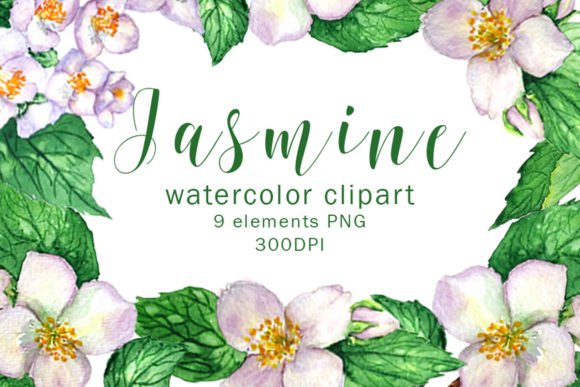
Evaluating Jasmine Watercolor Assets for Creative Projects
In the realm of digital design and DIY crafting, the selection of visual elements plays a pivotal role in defining the aesthetic tone of a project. Jasmine Watercolor refers to a specific category of digital assets featuring hand-painted illustrations of jasmine flowers, twigs, and leaves. These elements are typically rendered in a traditional watercolor style, characterized by soft edges, translucent layers, and organic textures that mimic real paint on paper. For designers, crafters, and business owners, understanding the utility and limitations of these assets is essential before integrating them into workflows ranging from wedding stationery to commercial product branding.
Understanding the Aesthetic and Technical Composition
At its core, a Jasmine Watercolor collection offers a bridge between traditional artistry and digital convenience. Unlike vector graphics, which rely on mathematical paths and often possess a rigid, uniform look, watercolor clipart retains the imperfections and fluidity of hand painting. This specific subset focuses on the jasmine plant, known for its delicate white blossoms and vibrant green foliage. The visual appeal lies in its ability to convey elegance, purity, and natural beauty without appearing overly synthetic.
From a technical standpoint, high-quality sets in this category usually provide files in PNG format with transparent backgrounds. This transparency is crucial, as it allows the user to layer the floral elements over various colors, patterns, or photographs without unsightly white boxes surrounding the image. Standard specifications for professional-grade packs often include resolutions around 3000 x 3000 pixels at 300 DPI (dots per inch). This resolution ensures that the images remain crisp when printed on physical media, such as invitation cards or fabric, while still being manageable in size for web use.
Primary Applications and Ideal Use Cases
The decision to utilize Jasmine Watercolor elements often stems from a need to evoke a specific emotional response or brand identity. These assets are particularly well-suited for industries and projects that prioritize sophistication and nature-inspired themes.
- Wedding and Event Stationery: The jasmine flower is a popular motif in weddings, symbolizing love and purity. Designers frequently use these clips for save-the-dates, menu cards, and place settings where a soft, romantic atmosphere is desired.
- Brand Identity and Logos: Businesses in the wellness, spa, bridal, or organic skincare sectors may find that a hand-painted jasmine logo communicates a sense of artisanal quality and gentleness that corporate fonts cannot achieve.
- Textile and Surface Design: Due to the high resolution of premium packs, these elements can be arranged into seamless patterns for printing on fabrics, ceramics, or packaging. The organic nature of watercolor blends well with materials like cotton, linen, and matte paper.
- Digital Content Creation: Bloggers and social media managers often use these overlays to soften photography or add decorative accents to quote graphics, enhancing engagement through visually pleasing details.
Benefits of Hand-Painted Digital Elements
One of the primary advantages of choosing a dedicated Jasmine Watercolor set is the authenticity it brings to a design. In an era where digital perfection is common, the subtle variations in pigment density and brushstroke direction found in hand-painted clips offer a human touch. This can make a brand feel more approachable and less mass-produced.
Furthermore, the versatility of PNG files cannot be overstated. With a comprehensive pack containing separate elements—such as individual blooms, buds, leaves, and branches—users have the flexibility to construct custom arrangements. Rather than being forced to use a pre-made bouquet, a designer can build a composition that fits a specific layout, whether it is a corner flourish for a letterhead or a scattered pattern for a background.
Time efficiency is another significant benefit. Creating original watercolor artwork requires skill, time, and physical materials. By utilizing a high-resolution clipart pack, creators can access professional-grade art instantly, allowing them to focus on the broader scope of their project rather than the execution of a single illustration.
Considerations and Potential Tradeoffs
While Jasmine Watercolor assets offer numerous benefits, they are not the optimal solution for every scenario. It is important for users to evaluate their specific requirements against the inherent characteristics of raster-based watercolor images.
Scalability Limitations: Unlike vector files (SVG or EPS), PNG images are raster-based. While a 3000-pixel width is sufficient for most standard print applications, enlarging the image beyond its native resolution will result in pixelation and loss of clarity. If a project requires massive scale, such as a building-sized billboard or a large vehicle wrap, vector alternatives might be a safer choice unless the watercolor file is exceptionally large.
Color Consistency: Watercolor art relies on the blending of colors. If a brand has strict Pantone matching requirements, reproducing the exact hue of a hand-painted leaf can be challenging. The organic nature of the medium means colors may vary slightly within the same element, which adds charm but reduces uniformity.
Licensing and Usage Rights: When downloading digital assets, users must carefully review the license agreement. Some "instant download" packs are licensed for personal use only, while others allow for commercial application up to a certain number of sales. Using these elements for products intended for resale, such as printed mugs or t-shirts, requires verification that the license permits such usage to avoid legal complications.
Comparing Alternatives: When to Look Elsewhere
There are situations where alternatives to Jasmine Watercolor clipart may better serve a project's goals. If the design objective is to create a modern, geometric, or minimalist aesthetic, the soft and fluid nature of watercolor might clash with sharp lines and bold typography. In such cases, flat design icons or vector line art would provide a more cohesive look.
Additionally, if the project involves complex animation or interactive web elements where the image needs to be manipulated dynamically via code, SVG vectors are generally superior. They allow for color changes via CSS and infinite scaling without quality degradation, features that static PNG watercolor files do not support.
For users seeking absolute uniqueness, purchasing a custom commission from an artist ensures that no other entity possesses the same imagery. While clipart packs are cost-effective, they are sold to multiple buyers, meaning similar designs may appear elsewhere. For a flagship brand identity where distinctiveness is paramount, a bespoke illustration might be a worthy investment over a stock clipart set.
Making an Informed Decision
Selecting the right graphic resources involves balancing aesthetic desires with practical constraints. Jasmine Watercolor elements are a powerful tool for those seeking to infuse warmth, nature, and elegance into their work. They excel in contexts where texture and organic forms enhance the message, such as in the wedding industry, boutique branding, and handmade crafts.
Before finalizing a purchase or download, creators should assess the resolution requirements of their final output, verify the licensing terms for their intended use, and consider whether the soft watercolor style aligns with their overall brand voice. By understanding both the capabilities and the limitations of these hand-painted digital assets, designers can effectively leverage them to create compelling, high-quality visual experiences that resonate with their audience.